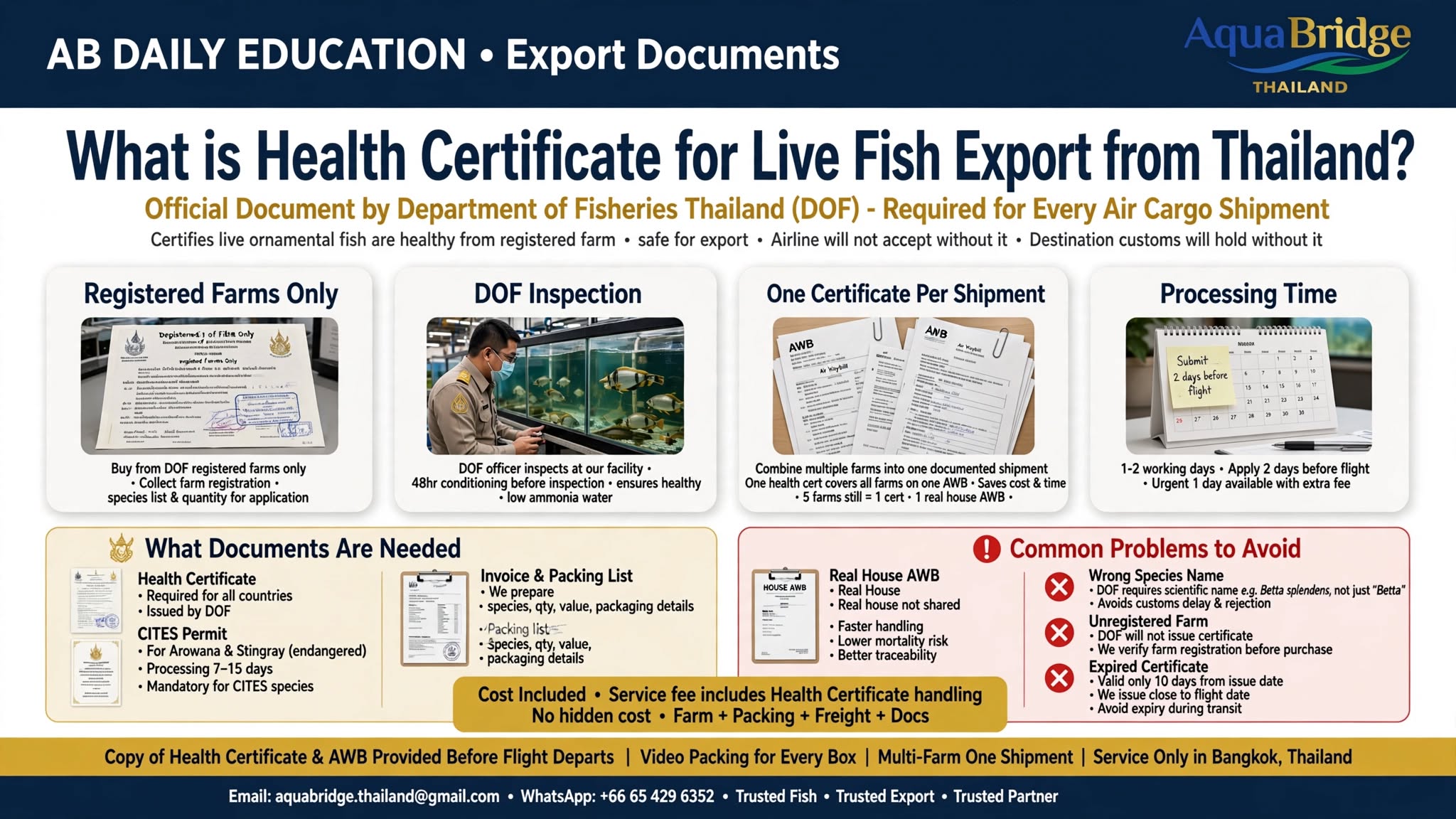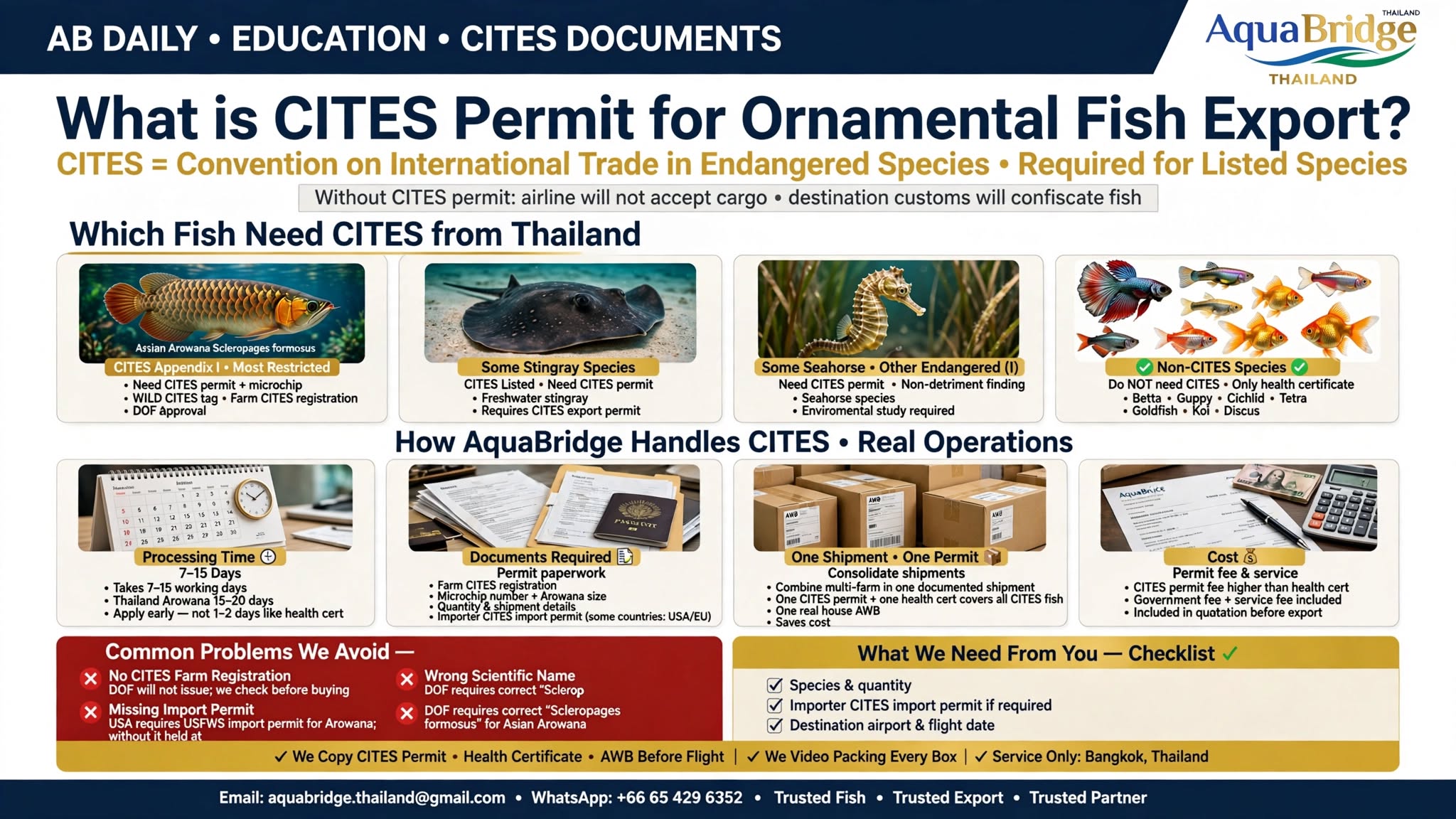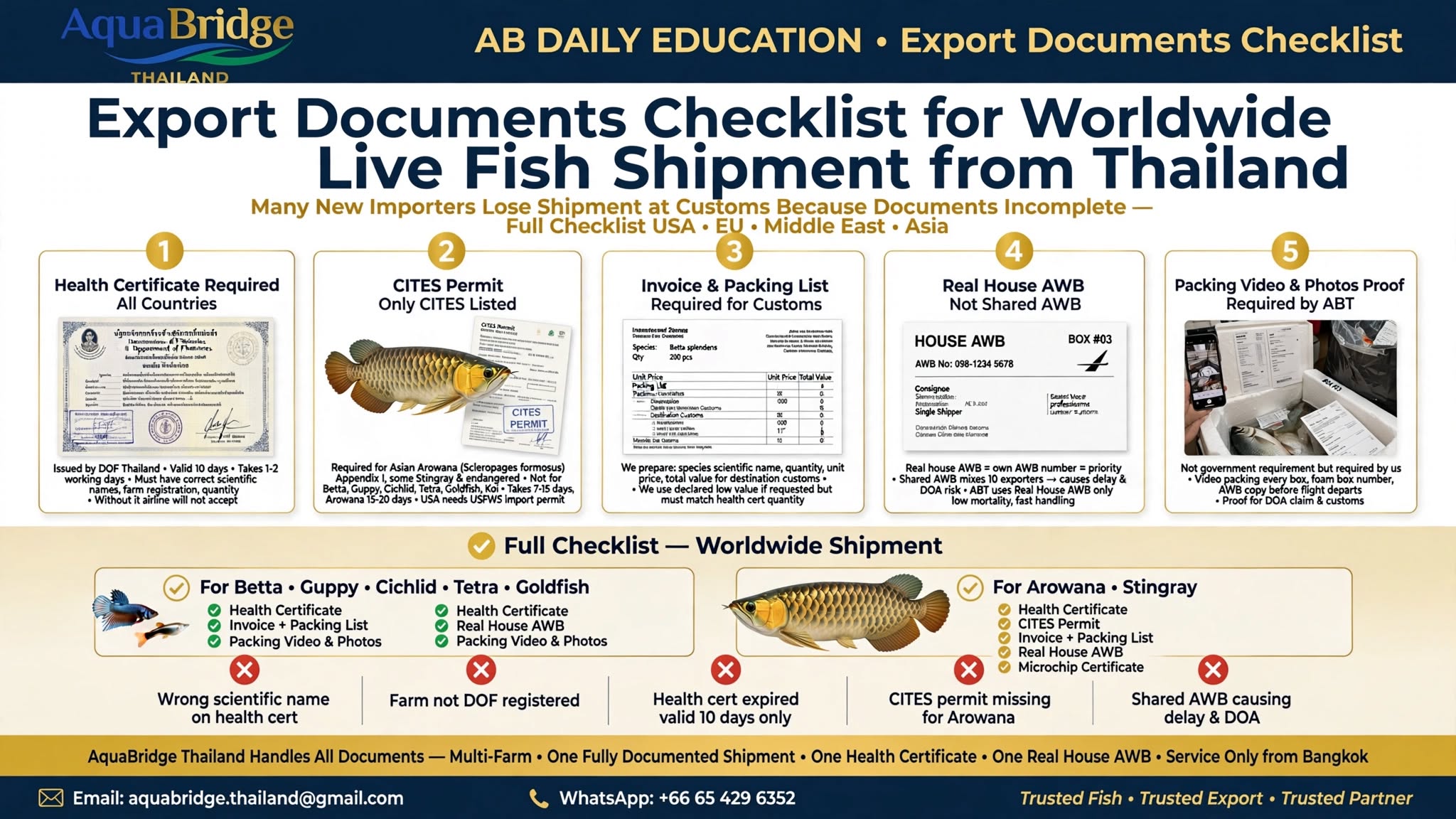
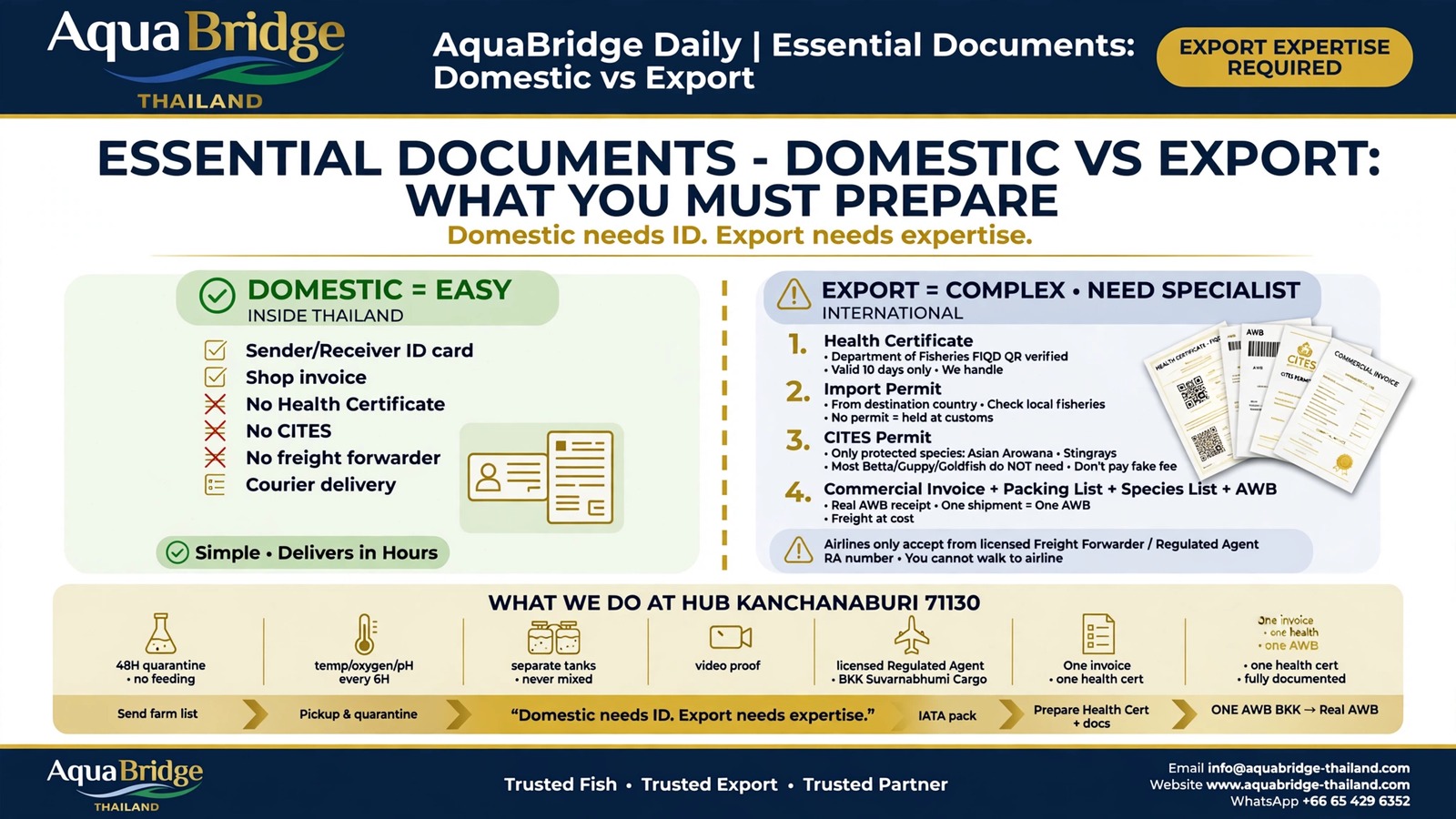
Domestic shipping in Thailand needs only ID card and shop invoice, but export needs a licensed Regulated Agent and government papers. You need Health Certificate from Department of Fisheries FIQD valid 10 days, Import Permit from destination, CITES only for Arowana/Stingray, plus Commercial Invoice,
Domestic is easy. Export is not. Many fail because they use a domestic mindset for export.
Domestic Shipment (Inside Thailand):
Simple. You need only sender and receiver ID card and shop invoice. No Health Certificate. No CITES. No freight forwarder. Courier delivers in hours.
Export Shipment (International):
Complex. You need a specialist. You cannot walk to the airline. Airlines only accept live fish from licensed Freight Forwarder / Regulated Agent with RA number. And you need government papers:
1. Health Certificate: From Department of Fisheries Thailand FIQD. QR verified. Confirms fish are healthy for export. Valid 10 days only. AquaBridge handles this for you.
2. Import Permit: From your destination country. Some countries require an import permit before fish fly. You must check with your local fisheries department. No permit = fish held at your customs.
3. CITES Permit: Only for protected species like Asian Arowana or some stingrays. Most Betta, Guppy, Goldfish do NOT need CITES. Don't pay fake CITES fees. We tell you the truth.
4. Commercial Invoice + Packing List + Species List + AWB: You get Real AWB receipt after flight. One shipment = One AWB. Freight at cost, no hidden markup.
What we do at AquaBridge Thailand? We are a 100% neutral bridge. At our Hub Kanchanaburi 71130: 48H quarantine no feeding, temp/oxygen/pH every 6H, separate tanks never mixed, video proof. Then we work with licensed Regulated Agent at Bangkok Suvarnabhumi Cargo BKK. One invoice, one health cert, one AWB. Fully documented.
Why it matters? Wrong agent = rejected at BKK Cargo = 48H delay = DOA. Right agent + right papers = cleared in hours.
Process: Send farm list > We pickup & quarantine > Check Import Permit + CITES need > Prepare Health Cert + docs > IATA pack > ONE AWB BKK > Send Real AWB.
"Domestic needs ID. Export needs expertise."